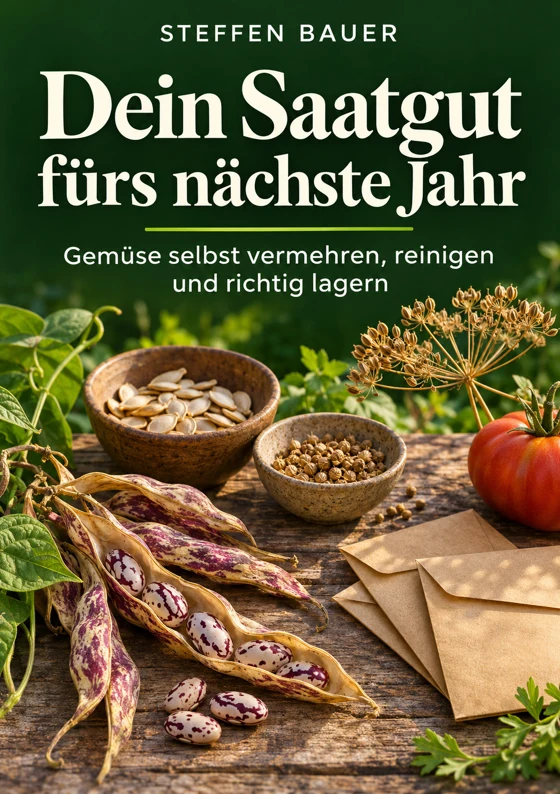
From the parent plant to the seed packet
Seed saving starts when you choose a variety. Which plants will you leave until their seed ripens? Where will the pollen come from? How do you know the harvest is dry enough to store? Steffen Bauer guides you through those decisions and shows what changes when you want to preserve a variety over several seasons.
What the book covers
Choose varieties and plan pollination
The book distinguishes between a first experiment, routine seed saving and long-term variety conservation. It explains open-pollinated varieties and F1 hybrids and shows why species and pollen sources matter. Carrots and wild carrots, and beetroot and chard, illustrate the risk of crossing.
Recognise when seed is ready
A cucumber grown for seed stays on the plant longer than one grown for salad. With peas, the aim is to let selected pods ripen. The crop profiles show what maturity looks like and how to handle dry seed heads and fleshy fruits.
Clean, dry, store and test
Sieves, trays or a gentle current of air can help separate seeds from chaff. The book covers drying, labelling and keeping batches from different harvests apart. A germination test helps you plan how much seed to sow next season.
Worksheets for the garden
The seasonal plan helps you pick one or two crops and set aside growing space. Worksheets record parent plants, pollination, harvest, cleaning and drying. The book also includes cut-out labels, a storage record and a germination test sheet.